
NVIDIA RTX PRO 6000 Blackwell Hits $16,000 as GDDR7 Costs Pile Up
NVIDIA's flagship workstation GPU has nearly doubled its original launch price in under a year, with memory shortages and component supply issues driving the eye-watering increase.
From $8,500 to $16,000 in Less Than a Year
If you thought the consumer GPU market had gotten rough, the workstation side of things is not offering much relief. According to TechPowerUp, NVIDIA has updated its marketplace listing for the RTX PRO 6000 “Blackwell” workstation GPU to $16,000. That makes it the priciest card NVIDIA currently sells in a standard add-in board form factor, sitting just below the company’s server-grade B200 and B300 chips, which ship in the SXM form factor rather than a conventional PCIe slot.
The trajectory here is hard to look away from. The RTX PRO 6000 Blackwell launched at $8,565. In June, it jumped to $13,250. Now, just two months after that, it has climbed another $2,750 to hit $16,000. That represents roughly an 87 percent increase over the original MSRP, as reported by TechPowerUp, and the outlet notes that a full 100 percent increase over launch pricing could be on the table if costs continue rising, potentially pushing the card past $17,000.
The Memory Math Is Brutal
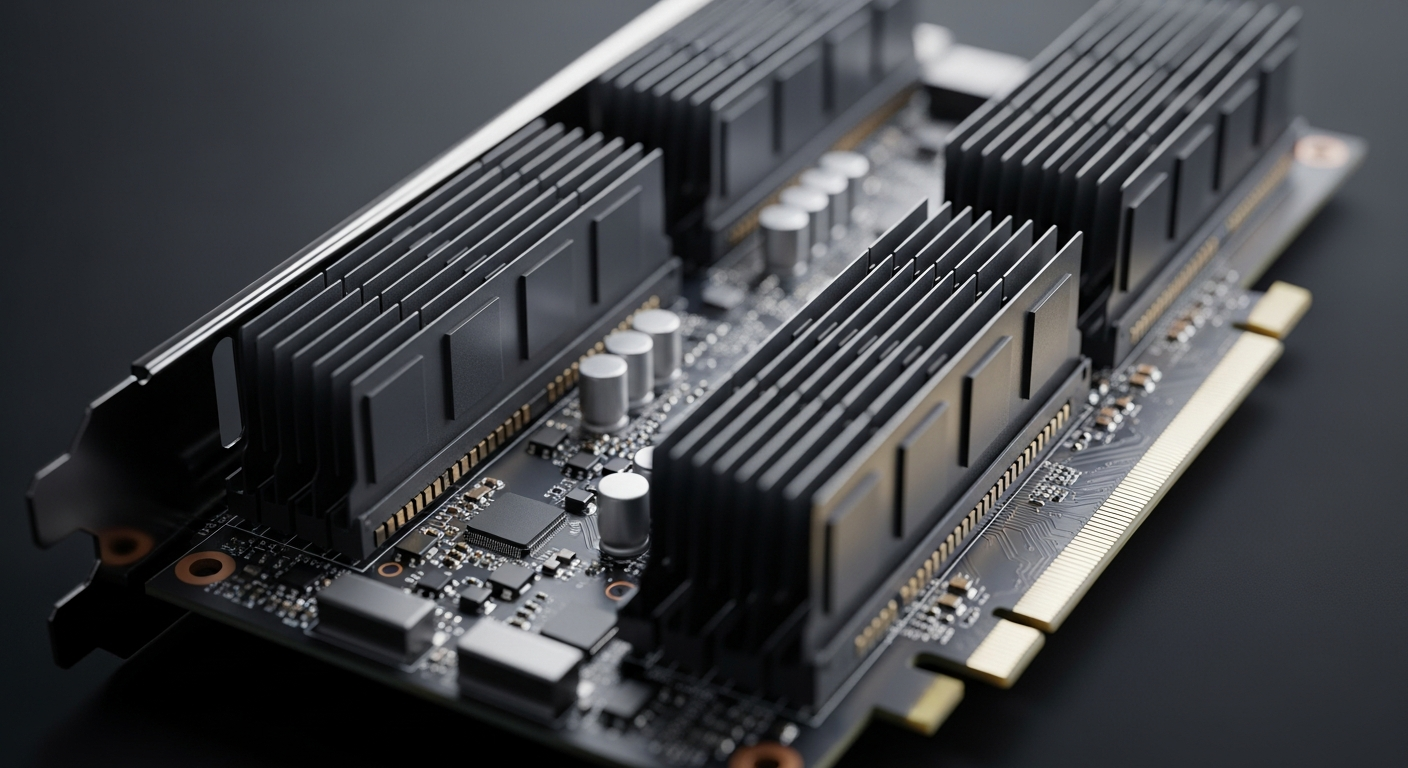
To understand why the price keeps climbing, it helps to look at what is physically on the card. The RTX PRO 6000 Blackwell packs 24,064 CUDA cores and 96 GB of GDDR7 memory, spread across 32 individual 3 GB modules. Sixteen of those modules sit on the front of the PCB alongside the GPU die, and sixteen more are mounted on the back, sandwiching the board entirely.
That memory architecture is impressive from a bandwidth and capacity standpoint. It is also financially punishing when supply gets tight. According to TechPowerUp, each 3 GB GDDR7 module was running somewhere between $60 and $70 in late July. Multiply that across 32 modules and the memory alone costs between $1,920 and $2,240 before NVIDIA has accounted for the GPU die, the multilayer ceramic capacitors, power delivery components, or anything else. TechPowerUp also flags MLCCs as being in tight supply right now, adding another layer of pressure to the bill of materials.
The compounding effect is significant. A supplier squeezing even a few extra dollars out of each GDDR7 module does not just nudge the cost up slightly. It nudges it up 32 times over.
Who Is Actually Buying This?
TechPowerUp is careful to point out that the pricing situation hits differently depending on who is doing the buying. For workstation clients, meaning studios, engineering firms, medical imaging labs, and the like, a price jump from $13,250 to $16,000 is a budget line item. Annoying, certainly, but workable within a professional procurement context. For gamers eyeing a card with 96 GB of GDDR7, which in a different world might have lived closer to something like a 5090 Ti, the price is simply out of reach.
One commenter in TechPowerUp’s discussion thread put it plainly: they had considered picking one up around the $7,000 to $8,000 range, but $15,000 or more changed the calculus entirely. Another noted, with the kind of resigned humor you develop after watching GPU prices for a few years, that some European suppliers had already been quoting figures in that neighborhood before tax since March.
What It Signals for the Broader Market
The RTX PRO 6000 Blackwell is not a consumer card, but its pricing tells a story that affects everyone watching the GPU space. GDDR7 supply constraints are real, and they are not only inflating workstation prices. Memory is memory. The same module shortages pressuring a $16,000 professional card are part of the same supply chain that feeds gaming GPUs.
NVIDIA has not publicly commented on the pricing change beyond the updated marketplace listing. For now, the RTX PRO 6000 Blackwell sits as a monument to what happens when 32 expensive memory modules meet a constricted global supply chain, with no obvious sign that either condition is about to ease.
How much does the NVIDIA RTX PRO 6000 Blackwell cost now?
As of August 12, 2026, the RTX PRO 6000 Blackwell is listed on NVIDIA's marketplace for $16,000, according to TechPowerUp.
What was the original launch price of the RTX PRO 6000 Blackwell?
The card originally launched at an MSRP of $8,565. It was bumped to $13,250 in June 2026 before reaching $16,000 in August.
Why is the RTX PRO 6000 Blackwell so expensive?
The card uses 32 GDDR7 memory modules across its PCB, and any increase in per-module supply chain costs multiplies quickly. Memory shortages and tight MLCC supplies are both contributing factors, according to TechPowerUp.
How does the RTX PRO 6000 compare to NVIDIA's server GPUs on price?
According to TechPowerUp, it is now NVIDIA's most expensive GPU outside of server offerings like the B200 and B300, which use the SXM form factor.