
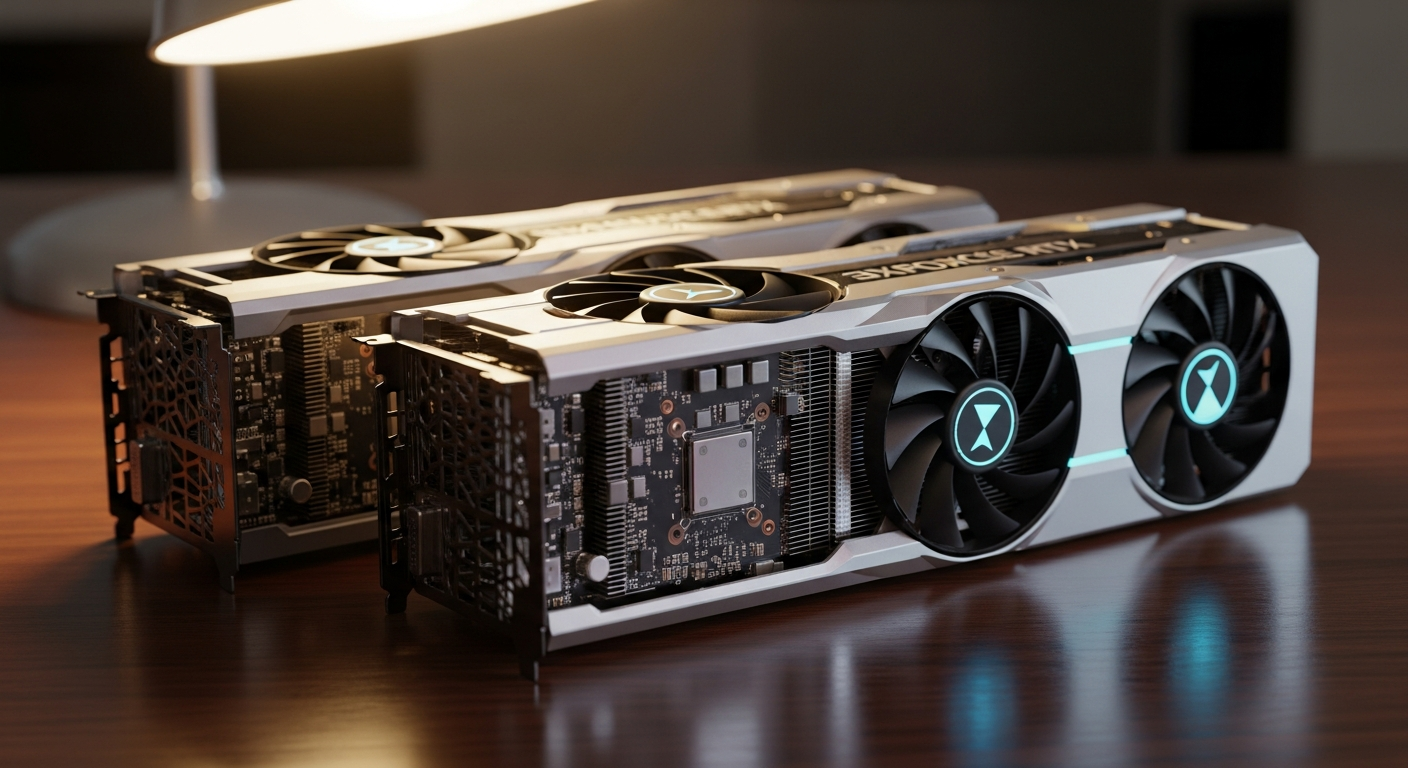
Budget GPUs in 2026: RX 6500 XT and GTX 1650 Super Hold On With Upscaling
Tom's Hardware tested two aging 4GB budget cards and found that upscaling tech keeps them surprisingly relevant for esports titles and internet cafe use in 2026.
Two Old Soldiers, Still Standing
The Radeon RX 6500 XT and the GeForce GTX 1650 Super were never flagship cards. They launched as affordable entry points, drew polite reviews, and quietly ended up in millions of budget builds and internet cafes around the world. Neither card carries more than 4GB of VRAM. In 2026, that sounds like a death sentence. According to Tom’s Hardware, it turns out the obituary was a little premature.
Tom’s Hardware ran both cards through their paces in 2026 conditions and found that upscaling technology has quietly rewritten the rules for low-end hardware. The short version: these GPUs are not dead. They are just working harder than they used to.
What Upscaling Actually Changes
The logic is straightforward once you sit with it. A 4GB card struggling to push native 1080p in a modern title can instead render at a lower internal resolution and let upscaling reconstruct the image. The visual result is not always perfect, but in a fast-paced competitive game where players are watching crosshairs and enemy positions rather than texture fidelity, the tradeoff is genuinely acceptable.
Tom’s Hardware’s testing points specifically to esports titles as the category where this combination of aging hardware and modern upscaling holds up best. Competitive games tend to be less demanding by design, prioritizing frame rates and responsiveness over visual showmanship. A GTX 1650 Super or RX 6500 XT running an upscaler in a shooter or a battle royale is a different proposition than asking either card to run a modern open-world title at high settings.
The piece frames both cards as particularly relevant for internet cafes, where operators are not trying to run the latest ray-traced epic. They need stable, reliable machines that can handle a rotating cast of players grinding ranked matches. Upscaling helps that use case considerably.
The 4GB Ceiling Is Real, but It Is Not Absolute
Neither card escapes the VRAM constraint entirely. Modern titles, especially those with high-resolution texture packs, can and do exceed 4GB in their default configurations. That is a genuine limitation and Tom’s Hardware does not pretend otherwise. The framing in the piece is not that these cards are secretly good for everything. The argument is more targeted: for the specific tasks they are suited to, upscaling has extended their useful lives in ways that were not obvious when they first launched.
The RX 6500 XT drew some criticism at launch for its limited PCIe bandwidth and cut-down feature set. The GTX 1650 Super arrived in a more complete form but still represented a floor rather than a ceiling. In 2026, with the GPU market stratified by enormous price jumps between tiers, cards sitting at the very bottom of the stack serve a real and ongoing function in regions and markets where cost matters enormously.
Who This Is Actually For
The answer Tom’s Hardware arrives at is specific, which makes it more useful. If you are managing an esports venue, stocking a school lab, or building machines where the primary workload is competitive multiplayer at 1080p, the RX 6500 XT and GTX 1650 Super are still serviceable in 2026 provided you lean on upscaling. That is a narrower endorsement than “buy one today,” but it is honest.
For individual buyers with more flexibility, better options exist at modest price premiums. The story here is less about personal purchases and more about installed bases: the enormous number of these cards already in the field, in cafes and shared machines and budget systems across the globe, can keep doing their jobs longer than the hardware cycle might suggest. Upscaling did not make these cards fast. It made them functional, and in the markets where they live, that distinction matters a great deal.
Are the RX 6500 XT and GTX 1650 Super still worth using in 2026?
According to Tom's Hardware, upscaling technology makes both cards viable for esports titles and internet cafe setups in 2026, despite their age and 4GB VRAM limitations.
What role does upscaling play for low-end GPUs in 2026?
As reported by Tom's Hardware, upscaling allows budget 4GB cards like the RX 6500 XT and GTX 1650 Super to maintain playable performance in modern games by rendering at lower resolutions and reconstructing image quality.
Which use cases suit these older budget GPUs best in 2026?
Tom's Hardware specifically identified esports gaming and internet cafe deployments as the primary scenarios where these cards remain a sensible, cost-effective choice.