
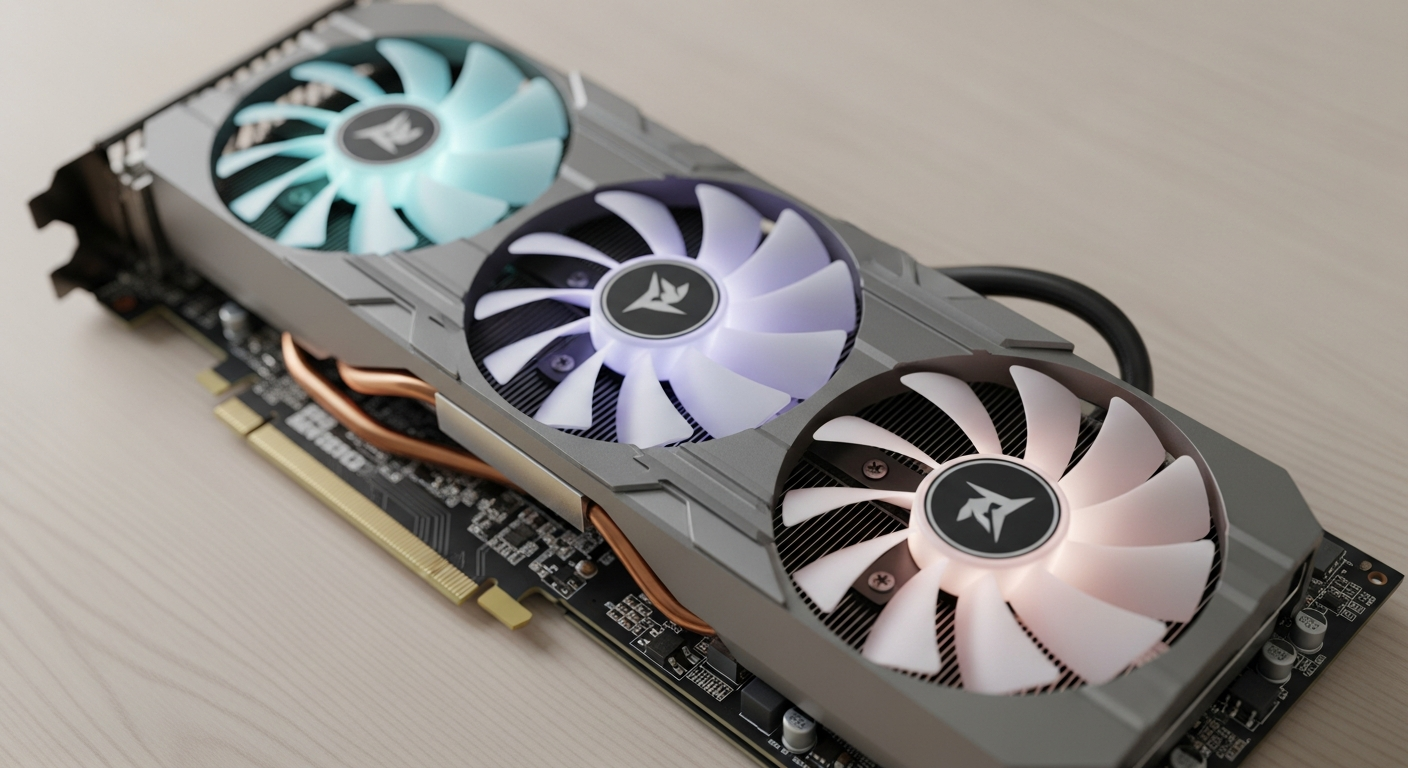
AMD RX 9050 Falls About 30% Short of RTX 5050 in Early Tests
Early benchmarks show AMD's cheapest RDNA 4 card handles 1080p gaming just fine, but it trails Nvidia's entry-level competition by a significant margin.
AMD’s Most Affordable RDNA 4 Card Arrives With a Catch
AMD’s Radeon RX 9050 is here, and it carries a reasonable pitch: the cheapest way into the company’s RDNA 4 architecture, with 8GB of VRAM and enough muscle for 1080p gaming. Early testing, however, tells a more complicated story. According to benchmarks reported by Tom’s Hardware, the card lands roughly 30% slower than Nvidia’s competing RTX 5050 in games. That is not a small gap.
For budget-conscious PC builders who primarily care about getting smooth frame rates at 1080p, the RX 9050 does deliver on that narrow promise. Tom’s Hardware describes the card as one that “comfortably handles 1080p gaming.” But comfortable and competitive are two different things, and against Nvidia’s entry-level Blackwell offering, the RX 9050 does not put up much of a fight.
What 30% Actually Means at This Price Point
A 30% performance deficit is meaningful at any tier, but it stings a bit more at the entry level, where buyers are already making compromises. Shoppers in this segment tend to be highly price-sensitive, which means the RX 9050 will need to offer a notable price advantage over the RTX 5050 to make the math work in AMD’s favor. Tom’s Hardware’s early results do not suggest AMD is winning on raw performance here.
The RX 9050 is the most affordable card in AMD’s current RDNA 4 lineup, sitting below higher-end options like the RX 9070 and RX 9070 XT that have drawn more favorable comparisons to Nvidia’s mid-range products. The picture at the bottom of the stack is noticeably less flattering.
That said, RDNA 4 does bring architectural improvements that can show up in specific workloads, and AMD’s driver ecosystem has matured considerably. Whether those factors translate to real-world advantages for everyday 1080p players depends heavily on the games they actually play.
8GB in 2026: Enough, for Now
The 8GB VRAM configuration is increasingly a point of debate across the industry. At 1080p with modest settings, 8GB remains workable for most current titles. Pushing into more demanding games at higher quality presets, however, can start to expose the limits of that allocation, particularly as texture budgets keep climbing.
For the buyer the RX 9050 is targeting, someone upgrading from an older integrated graphics solution or a very dated discrete card, 8GB is probably fine today. It may start to feel constrictive within a year or two depending on how aggressively developers continue to push memory requirements.
A Hard Sell Against the RTX 5050
The RX 9050 is not a bad graphics card in isolation. Running 1080p games without hiccups is a legitimate capability, and AMD’s RDNA 4 architecture carries real technical merit. The problem is that Nvidia’s RTX 5050 exists, and if early testing from Tom’s Hardware holds up across a wider game library, being 30% slower is a steep ask for buyers who have options.
AMD will need to position the RX 9050 at a price that reflects that gap, or the card risks being a footnote in a generation where the company’s higher-end RDNA 4 offerings have actually looked quite strong. Getting the entry-level tier right matters for volume and for the builders who are just starting to put together their first gaming rigs.
The early numbers are what they are. How AMD prices this card against Nvidia’s competing option will ultimately determine whether the RX 9050 earns a place in budget builds or quietly gets passed over.
How much slower is the AMD RX 9050 compared to the RTX 5050?
Early testing reported by Tom's Hardware shows the RX 9050 is roughly 30% slower than the RTX 5050 in games.
Can the AMD RX 9050 handle 1080p gaming?
According to early testing, the RX 9050 comfortably handles 1080p gaming, even if it does not impress against the competition.
How much VRAM does the RX 9050 have?
The RX 9050 features 8GB of VRAM, making it AMD's most affordable RDNA 4 graphics card.